Kitchen Benchtop Materials: What To Choose For Your Renovation
Choose a cabinet colour and most people can picture the result in seconds. Benchtops are trickier. They take the daily wear of chopping boards, hot pans and spilt wine, yet they're also the surface your eye lands on first when you walk into the room. Getting the material right matters more than almost any other renovation decision, and it's one that's hard to reverse once installed.
Homeowners weighing up kitchen renovations in Lismore tend to ask the same handful of questions early on: which material actually lasts, which one needs babying, and which one fits the budget without looking like a compromise. The honest answer is that no single product does everything well. Laminate, engineered stone, timber, porcelain and stainless steel each solve different problems, and the right pick usually comes down to how the kitchen is used day to day rather than which material photographs best.
This guide runs through the main kitchen benchtop options available in Australia, with straightforward pros, cons, rough cost ranges and what upkeep actually looks like once the tradespeople have left.
Laminate Benchtops: Budget-Friendly and Versatile
Laminate remains one of the most common kitchen benchtop materials, largely because it does a reasonable job at a low price point. Modern laminates have moved well past the timber-look sheets of decades past — current ranges include convincing stone and concrete finishes, matte textures and even softly rounded post-formed edges.
- Cost typically sits at the lower end of the market, making it a sensible choice for rental properties or first renovations
- Resistant to everyday knocks, though not immune to scratches or heat damage from hot pots
- Available in a wide range of colours and finishes, including options that mimic engineered stone
- Not repairable if chipped or delaminated — damaged sections usually need replacing
Engineered Stone Benchtops: Durability Meets Design
An engineered stone benchtop is manufactured from crushed quartz or similar minerals bound with resin, which gives it a consistent pattern and a harder wearing surface than natural stone in most cases. It's become a mainstay in Australian kitchens over the past decade, largely because it balances appearance with practicality.
- Non-porous surface that resists staining from coffee, wine and oils when cleaned promptly
- Available in a broad spectrum of patterns, from plain whites to bold veined designs
- Heavier than laminate, so it requires adequate cabinet support and professional installation
- Mid-to-upper price range, though pricing varies significantly by brand, colour and slab thickness
Timber Benchtops: Natural Warmth with Extra Care
Timber brings a warmth that manufactured materials struggle to replicate, and it's a popular choice for homeowners after a more rustic or Scandinavian-inspired look. That warmth comes with a maintenance commitment, though, since timber is a porous, living material.
- Needs periodic oiling or sealing to prevent water damage and staining
- Prone to scorching from hot pans and scratching from knives if a cutting board isn't used
- Can be sanded back and re-oiled to refresh its appearance, which laminate and stone can't offer
- Cost varies widely depending on timber species, with hardwoods sitting at the higher end
Porcelain Benchtops: The Newer Contender
Porcelain slabs have gained traction in Australian kitchens more recently, offering a very hard, heat-resistant surface manufactured in large format sheets. It's worth considering for households wanting a low-maintenance option without the bulk of thicker stone slabs.
- Highly resistant to heat, UV fading and scratching due to its dense composition
- Thinner than most engineered stone, which can suit certain design briefs but requires careful edge detailing
- Non-porous and simple to clean with standard household products
- Installation demands a specialist, as the material is brittle to cut and can crack under uneven pressure
Stainless Steel Benchtops: Practical and Industrial
Stainless steel is less common in residential kitchens than in commercial ones, but it suits homeowners who want a genuinely low-fuss, hygienic surface. It has a distinct industrial look that either fits a kitchen's design or doesn't, so it's worth confirming the aesthetic before committing.
- Naturally resistant to bacteria, making it a practical choice near food prep zones
- Can scratch and show fingerprints, though scratches are generally cosmetic rather than structural
- Handles heat well, so hot pans are less of a concern than with laminate or timber
- Custom fabrication means pricing depends heavily on gauge thickness and finish
Stone Benchtop vs Laminate: Weighing Up the Trade-offs
The stone benchtop vs laminate comparison comes up in almost every renovation conversation, largely because these two sit at opposite ends of the cost and durability spectrum. Laminate suits renovations where budget is the primary driver or where the kitchen won't see heavy daily use. Engineered stone suits households wanting a surface that holds up to years of cooking without showing its age.
- Laminate is quicker and cheaper to replace if styles change down the track
- Stone generally adds resale value due to its perceived quality and longevity
- Laminate can chip at exposed edges over time; stone is far less prone to this
- Both are available in similar visual styles, so the decision often comes down to budget and how the kitchen is actually used
Cost Ranges and What Affects Them
There's no single figure that applies to every kitchen, since benchtop pricing depends on square metreage, edge profiles, cut-outs for sinks and cooktops, and the supplier chosen. As a general guide across the market:
- Laminate: typically the most affordable per linear metre, with premium finishes costing more
- Engineered stone: a noticeable step up from laminate, with pricing influenced by colour rarity and slab thickness
- Timber: ranges from moderate for softwoods to considerably higher for select hardwoods
- Porcelain: comparable to or slightly above engineered stone, depending on format and installation complexity
- Stainless steel: often priced per custom fabrication rather than a standard rate, so quotes vary
Getting a written quote based on your actual kitchen layout is the only reliable way to compare like with like.
Matching Your Benchtop to Your Cabinet Finish
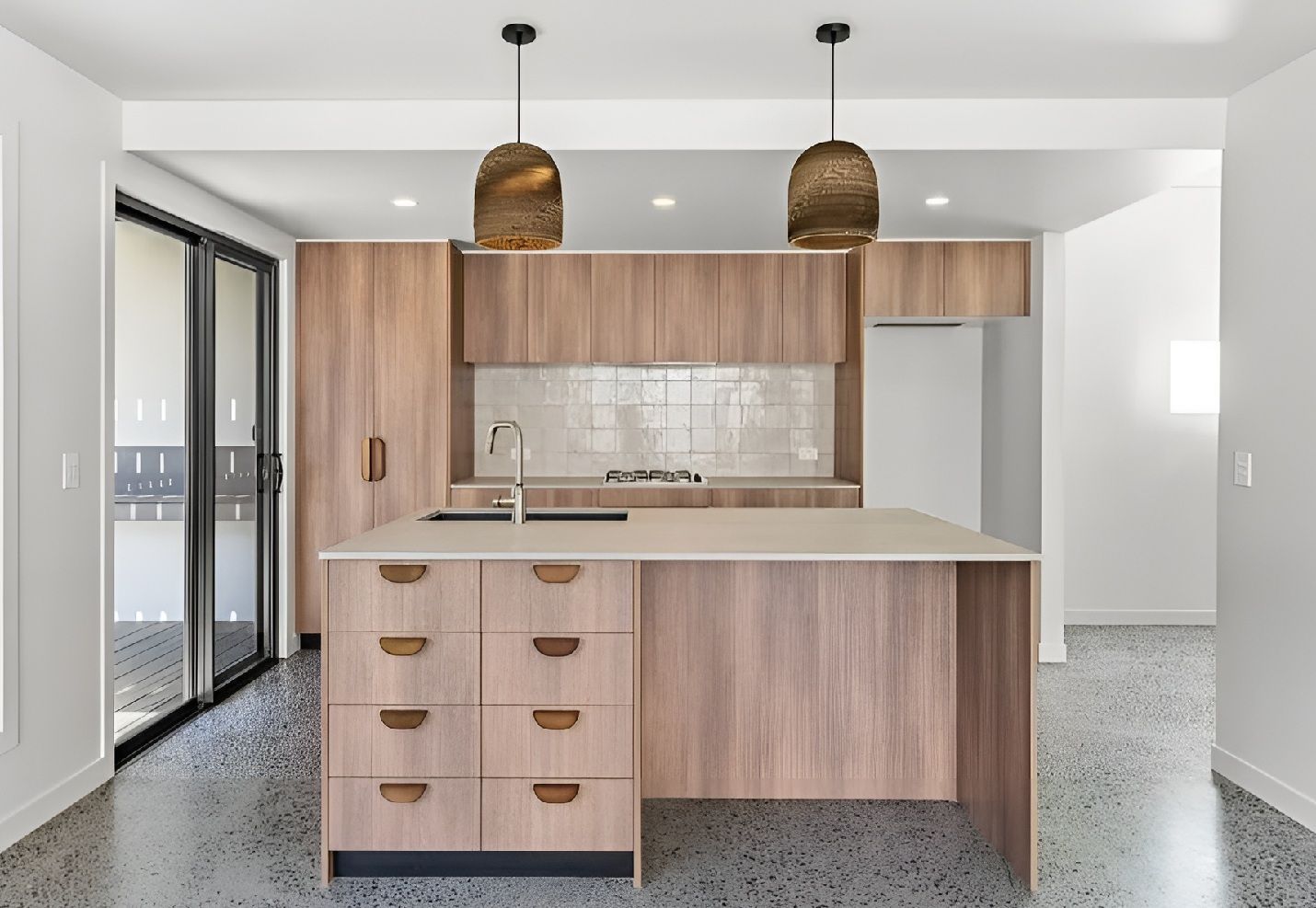
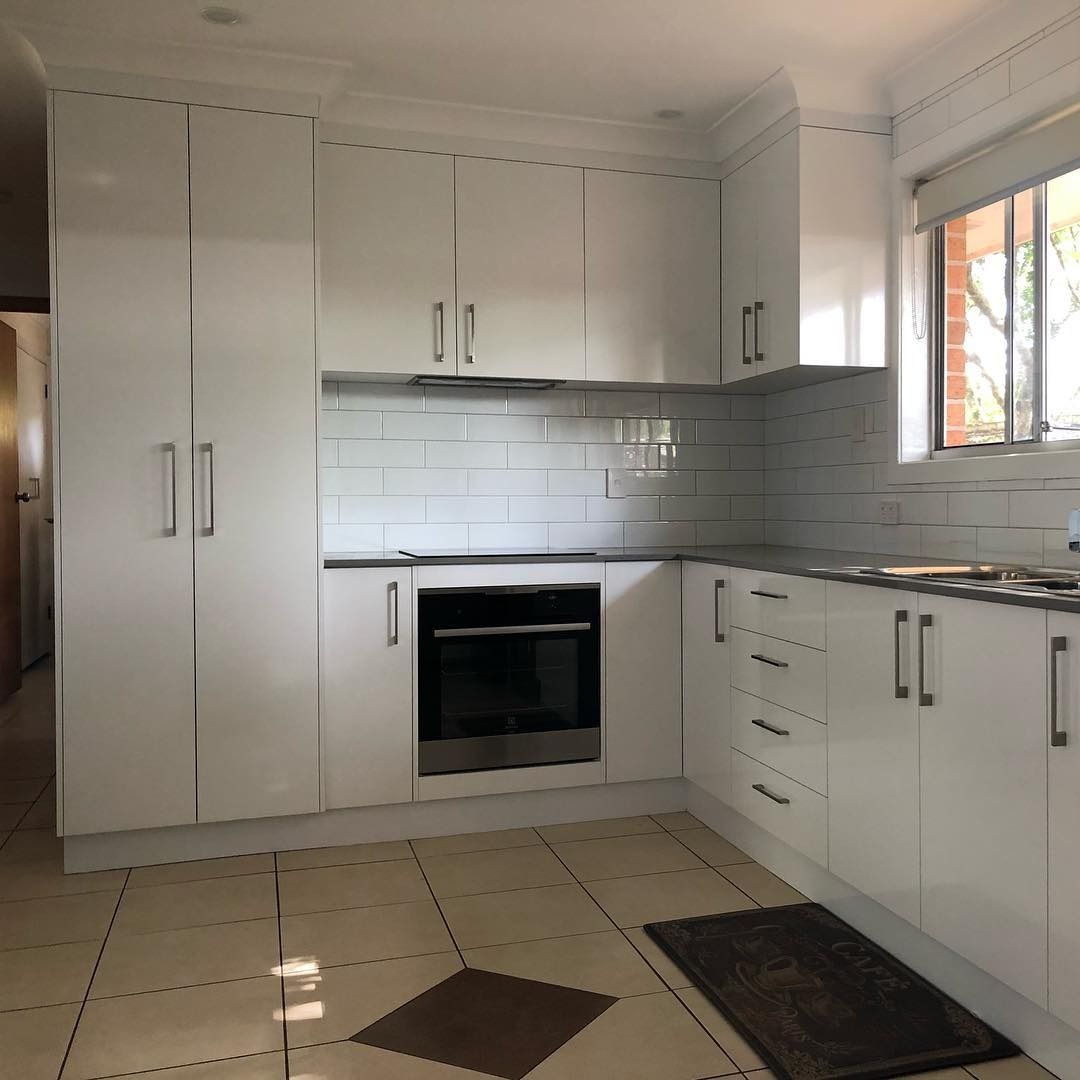
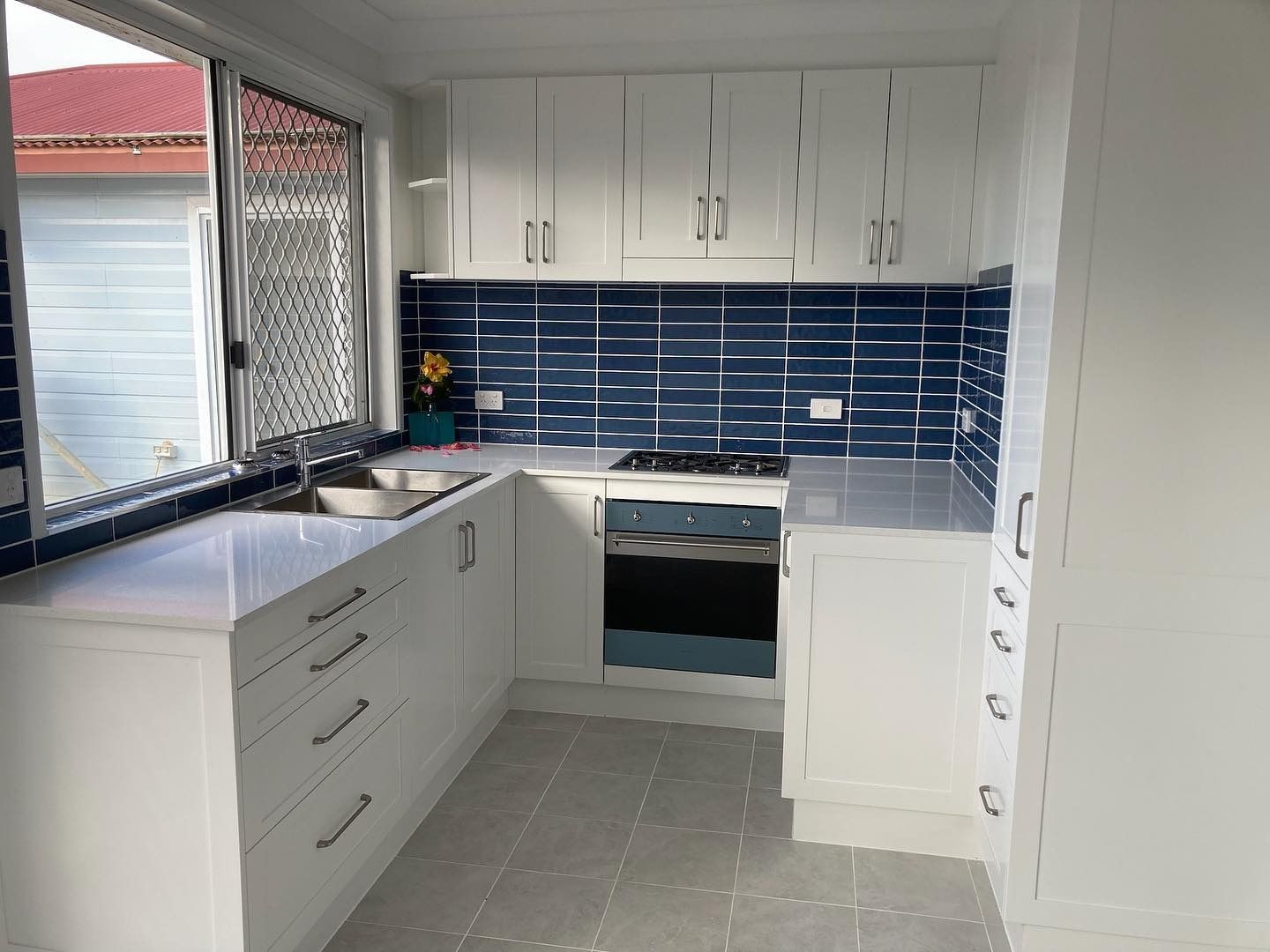
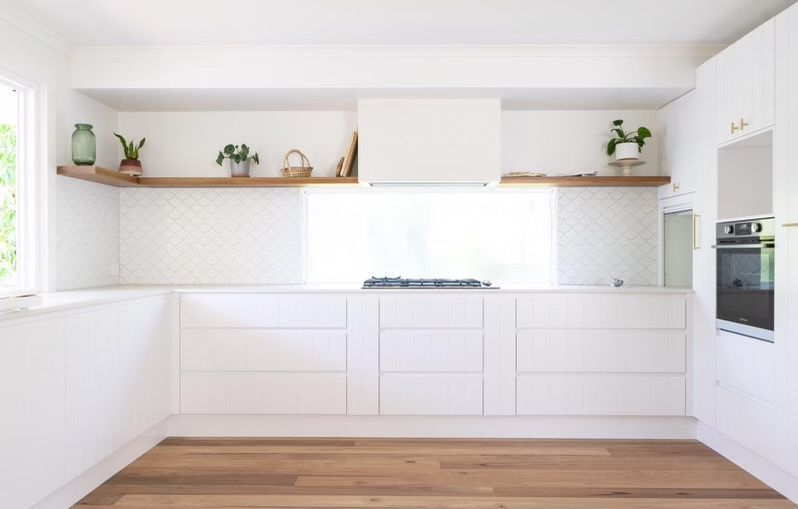
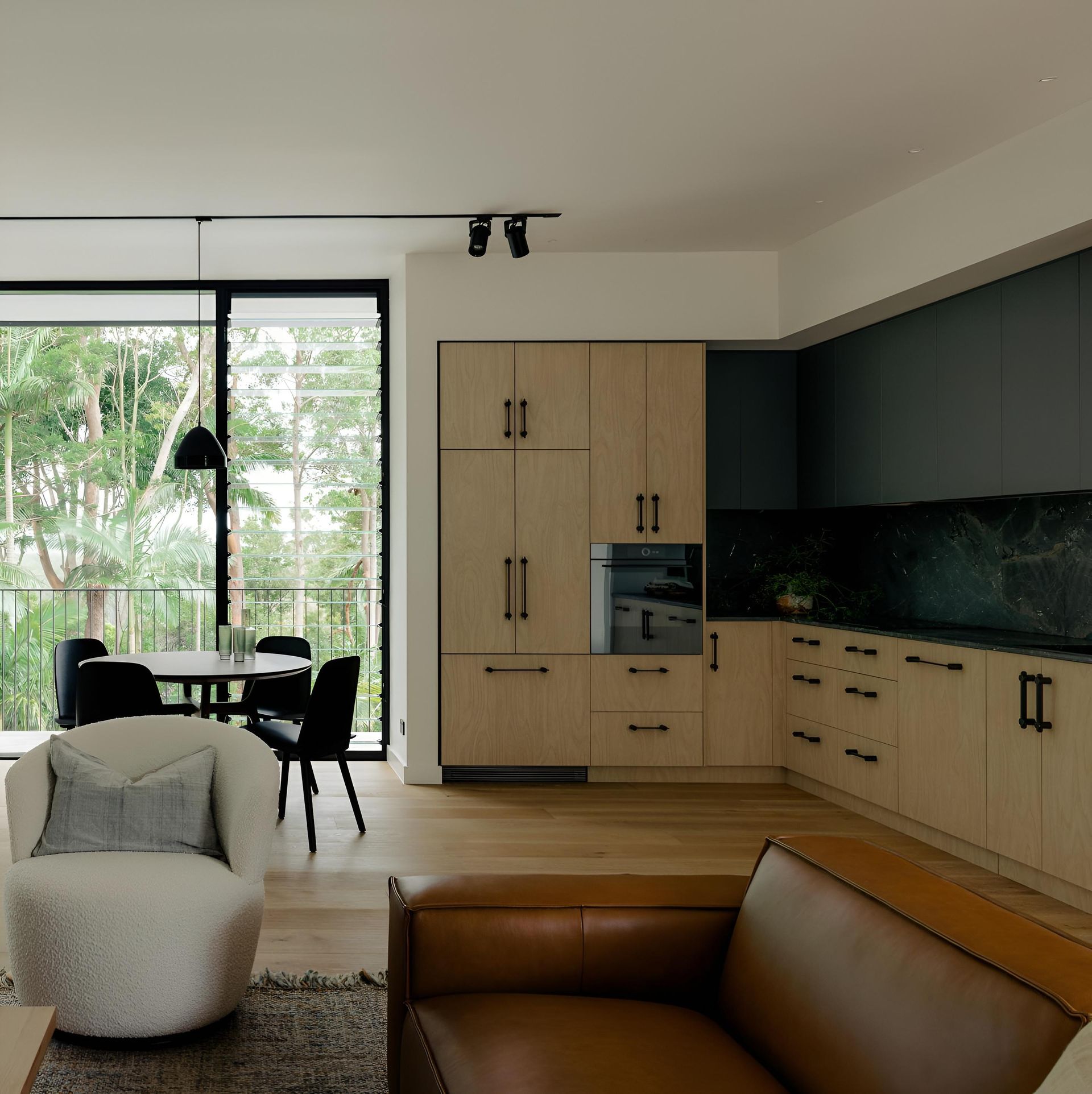
A benchtop rarely stands alone. It sits against a splashback, above cabinetry, and under lighting that changes how colours and textures read throughout the day. Choosing benchtop and cabinet finishes together, rather than in isolation, tends to produce a more cohesive result.
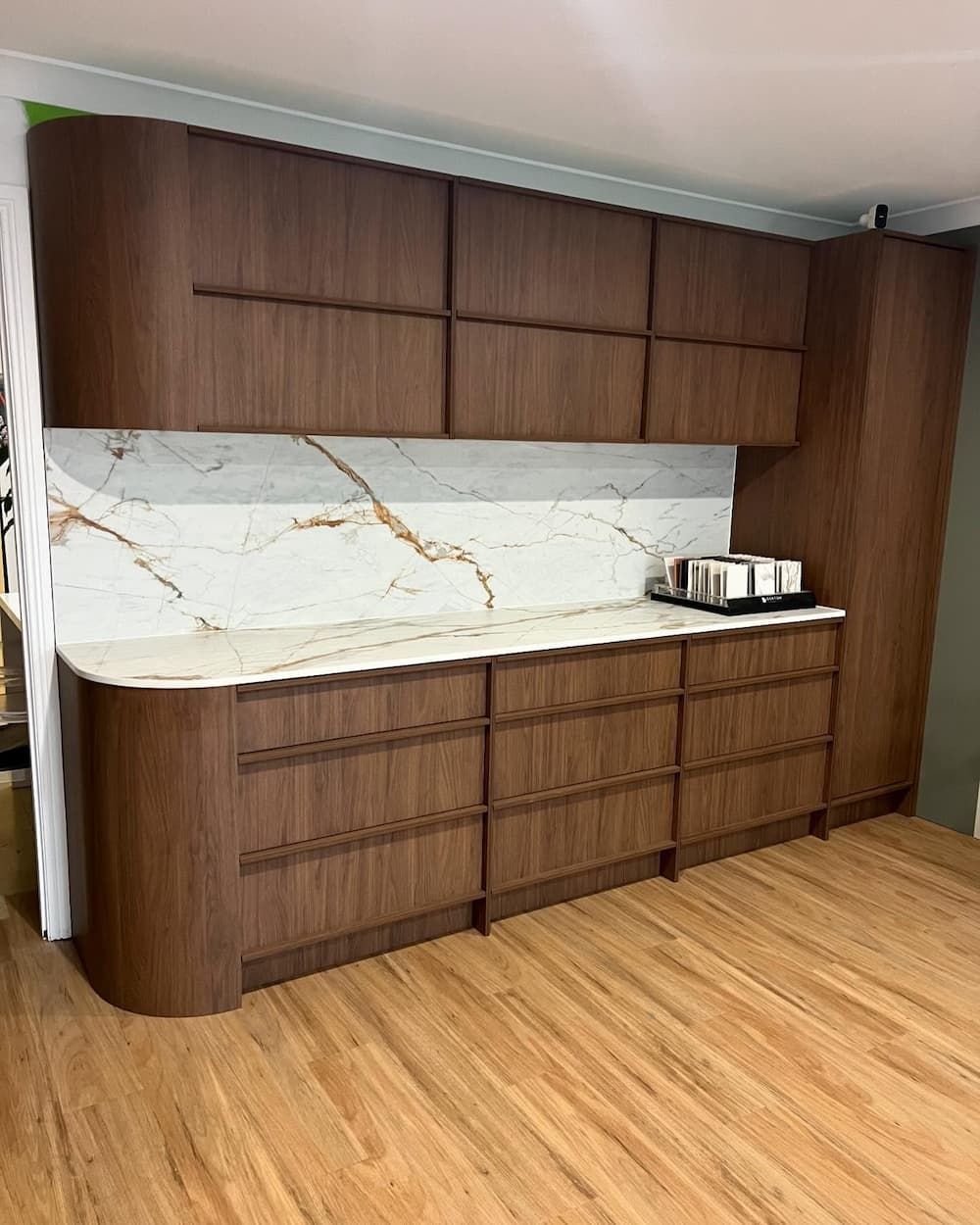
- Darker cabinetry often pairs well with lighter benchtops to avoid a heavy, closed-in feel
- Timber-look cabinets can clash with busy stone veining, so simpler benchtop patterns often work better
- Matte cabinet finishes tend to sit comfortably alongside both matte and gloss benchtop surfaces
- Sample boards viewed in the actual kitchen lighting give a far more accurate picture than showroom displays
Your benchtop and cabinet finish work together — read our guide on how to choose materials for your custom kitchen cabinets to see how the two decisions relate.
Whichever direction you lean, the material that suits a household of five running a busy kitchen every night won't necessarily suit a couple who mostly reheats takeaway. Matching the benchtop to how the space is actually used, rather than to trends alone, tends to hold up better once the renovation dust has settled.
Get in Touch About Your Renovation
We at Infinity Kitchens & Cabinets work through these material decisions with homeowners every week, and we understand the particular challenges that come with renovating in the Northern Rivers, from humidity affecting timber to the practicalities of sourcing and delivering slabs to properties outside major metro areas. As the cabinet makers Lismore locals trust, we work with premium suppliers like Polytec and Laminex to source benchtop materials that suit your style and budget, whether you already have a clear look in mind or want help weighing up the options.
If you're planning a kitchen renovation in Lismore and want to talk through which benchtop material actually suits your household,
get in touch with our team or book a design consultation. We're happy to bring samples, talk through cost ranges specific to your kitchen, and help you make a decision you won't need to revisit in twelve months.